The films came second. The water still comes first.
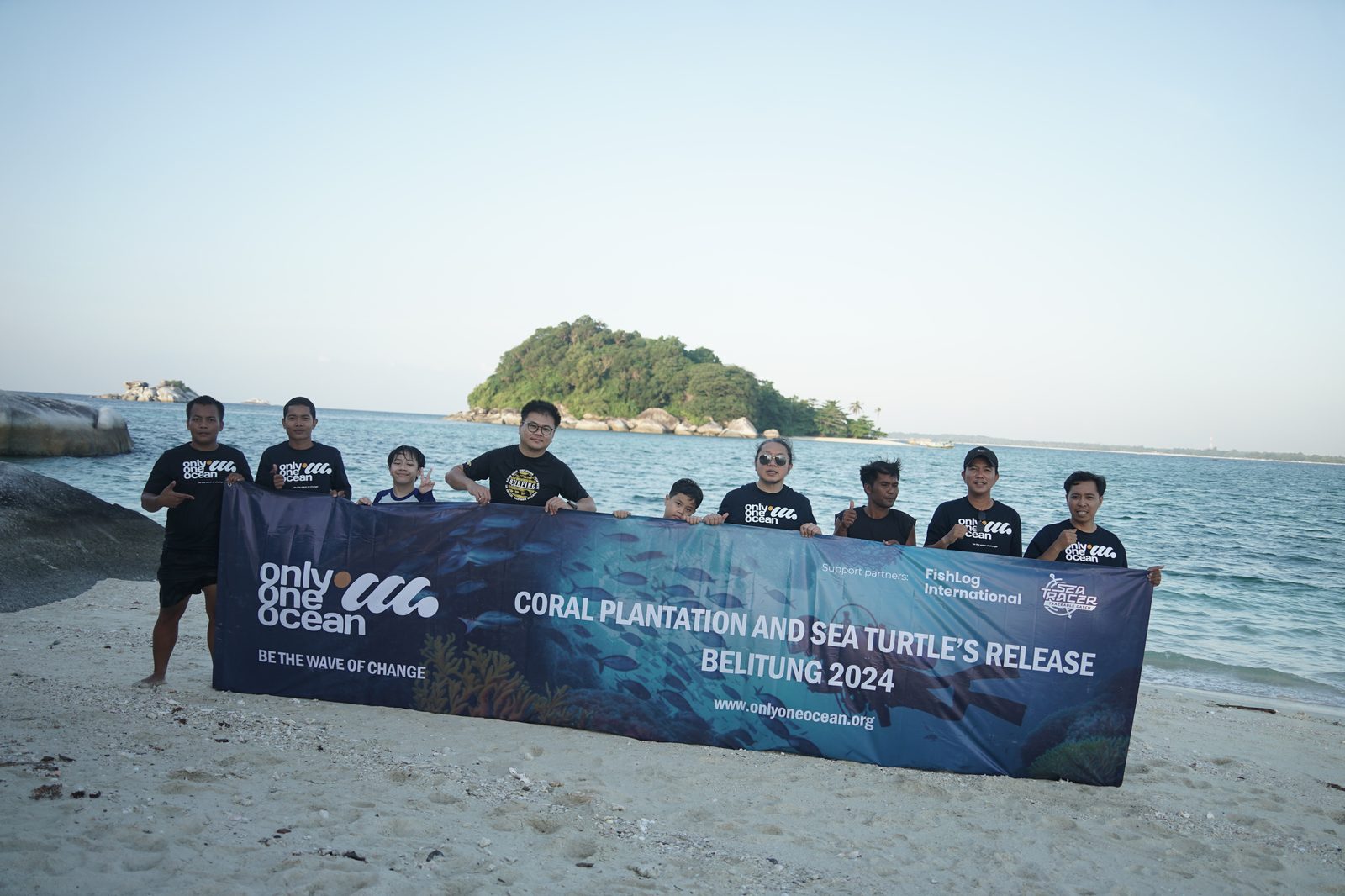
The Only One Ocean Corp is a 501(c)(3) nonprofit doing physical work in coastal Indonesia, and continues to. The work runs on two fronts: ecological and economic. On the ecological side, our 2024 field program in Belitung, Coral Plantation and Sea Turtle's Release, ran in partnership with FishLog International and SeaTracer. Coral replantation continued through 2025, with a new session in August. On the economic side, we run financial literacy sessions with fishermen's wives, because a sustainable ocean livelihood cannot be separated from the household economy that lives from it.
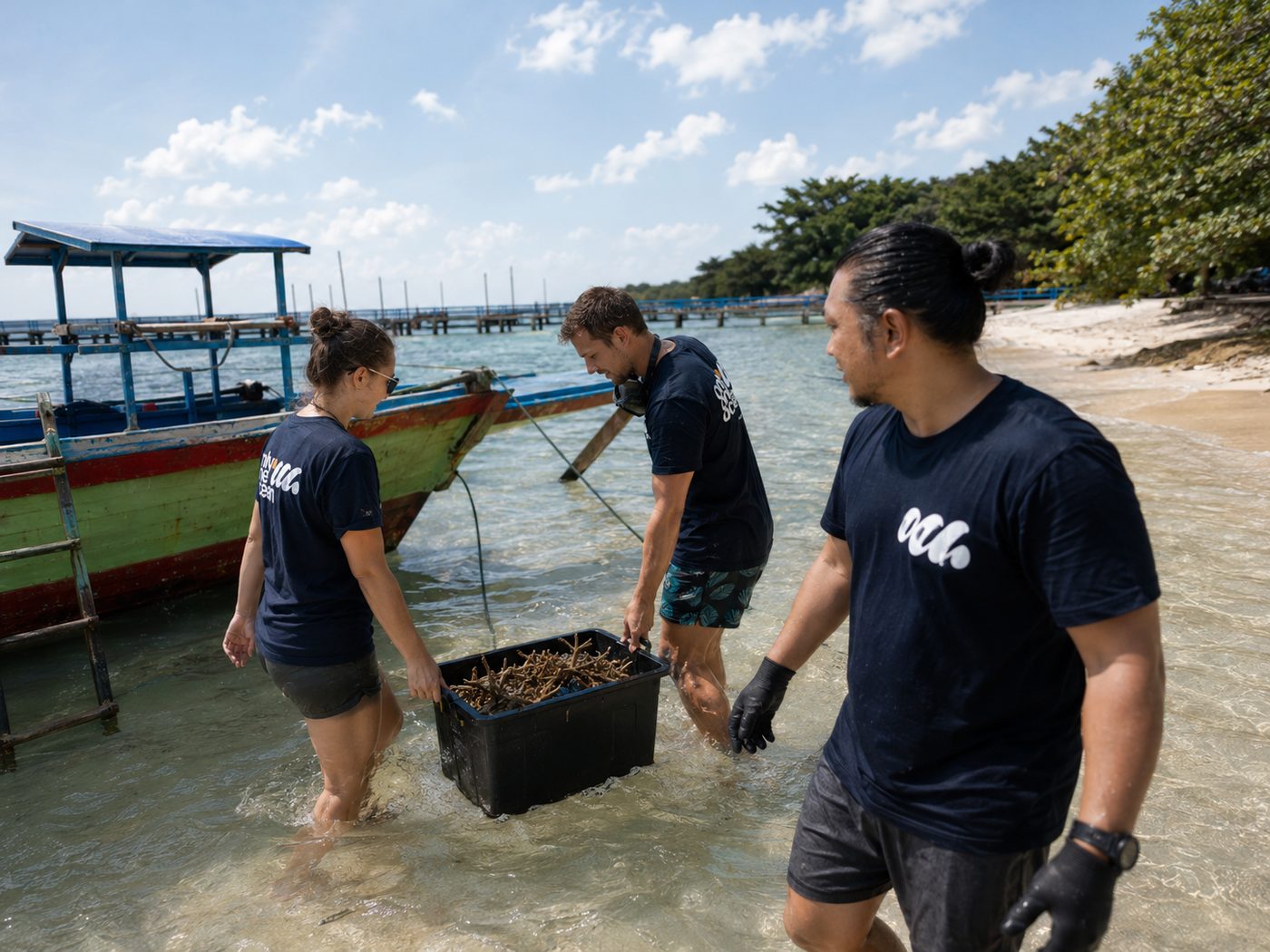
Sea-based tin mining is turning Belitung's reefs into ghostly white graveyards, sediment slowly suffocating the corals that fishing families and dive tourism have depended on for generations. We partner with Pak Hardi, a local boat captain whose livelihood was destroyed by the sediment, to replant coral fragments one at a time. Every $10 donated funds one coral seed, plus the fragments, equipment, and training to expand what began as one man's stubborn work into a community effort.
The 2024 program ran under the Belitung integrated banner with FishLog International and SeaTracer. A new coral replantation session ran in August 2025. The work continues.
Institutional doors have opened along the way. O3 has corresponded directly with the Mayor of Belitung and Indonesia's Department of Tourism, moving the effort from community-scale to policy-adjacent conversation.
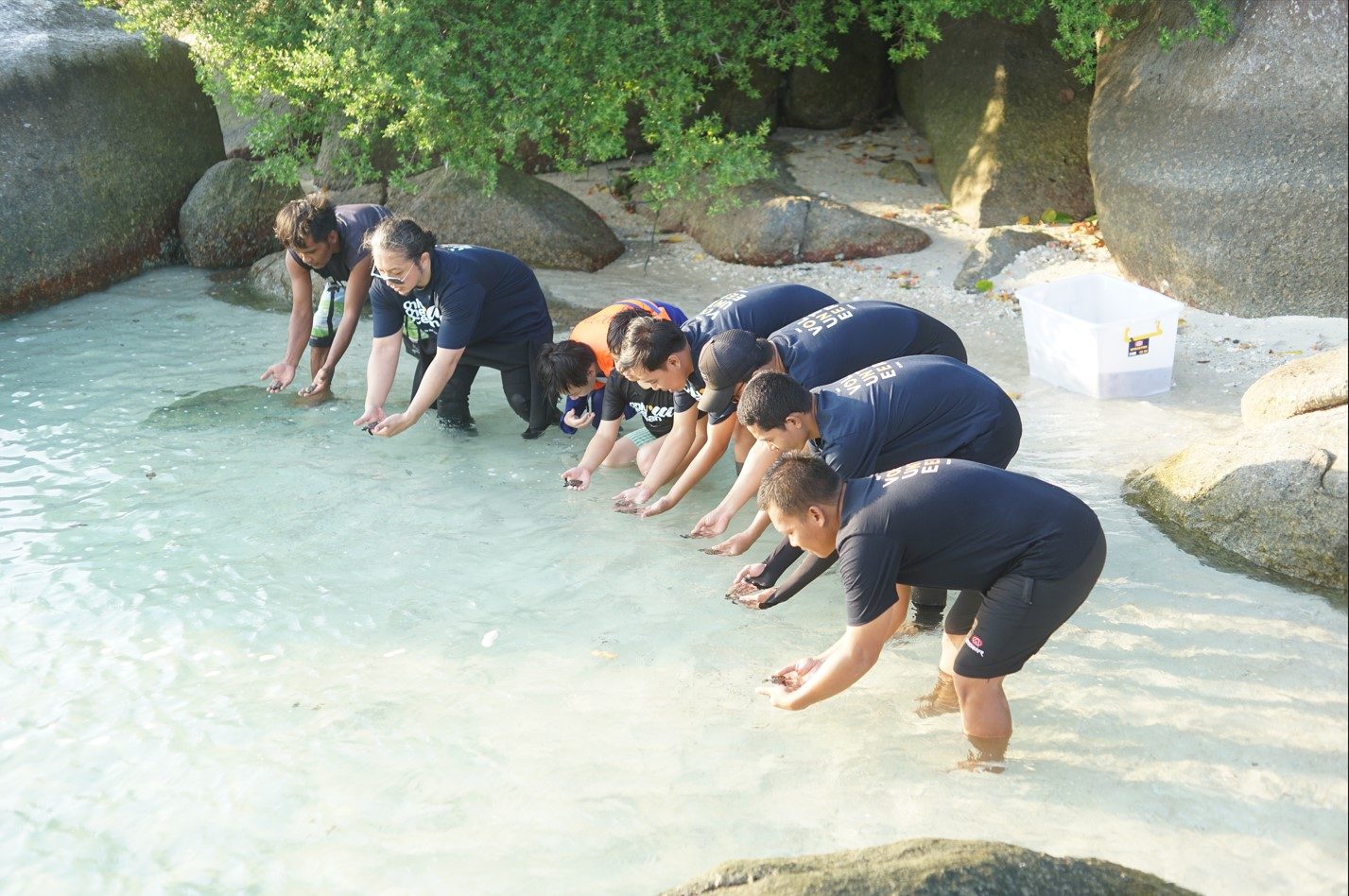
Six of the world's seven sea turtle species are endangered or critically endangered. Along the Belitung coast, the greatest threat to a nest is human consumption of the eggs. We monitored nests, intercepted hatchlings before they could be taken, and released them at the ocean's edge to give them their first fighting chance. The 2024 target was one thousand hatchlings released. Every $10 donated moved one hatchling from beach to sea.
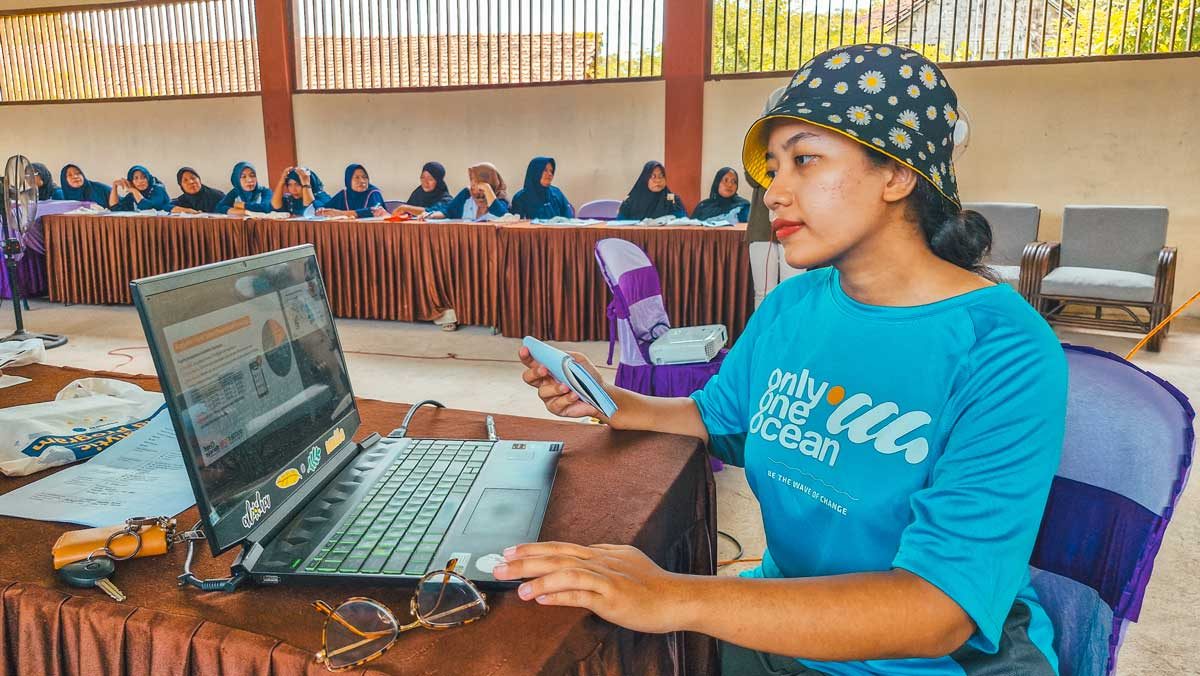
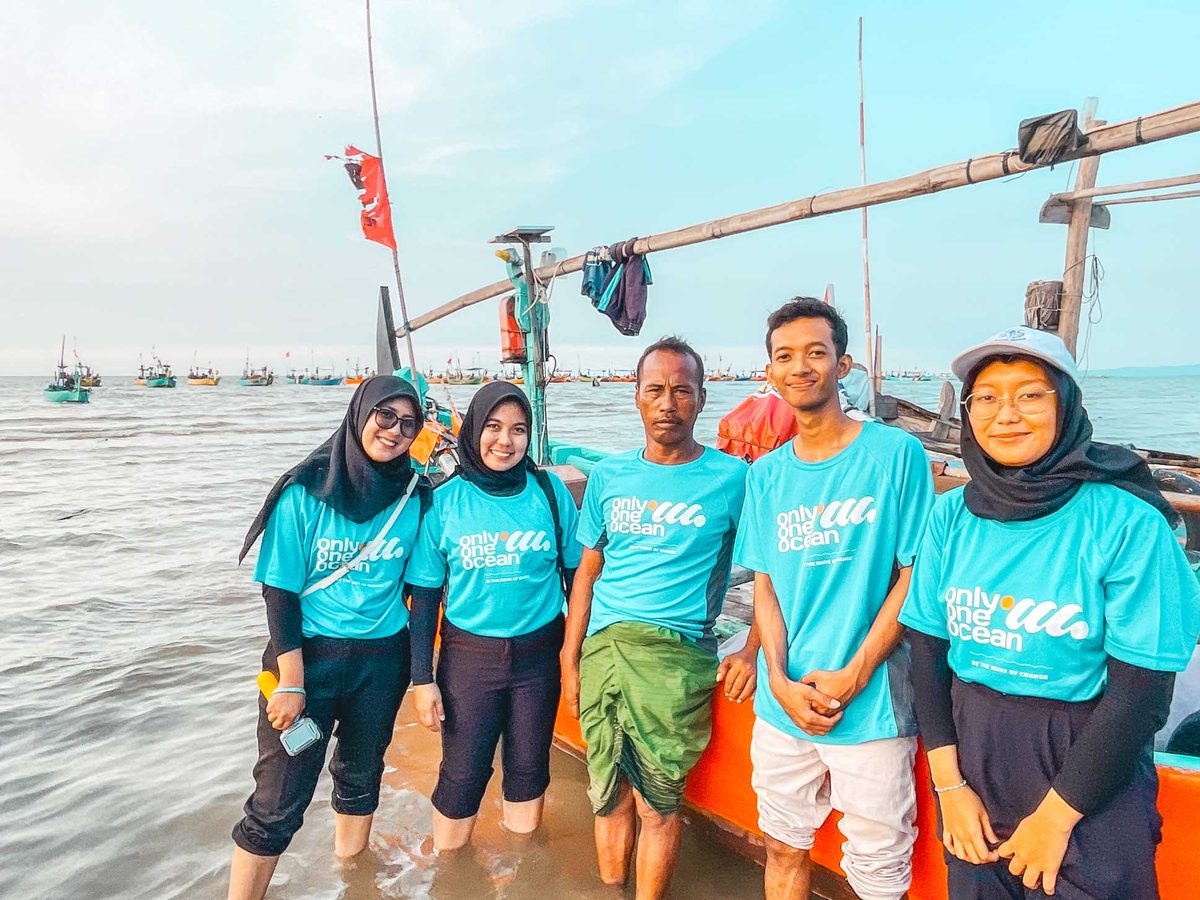
In Indonesian coastal communities, fishermen's wives are the household's de facto CFOs. Their husbands are at sea for days at a time; the wives sell the daily catch at market, hold the family savings, and make the economic decisions that determine whether children stay in school and whether a bad fishing season becomes a debt spiral. Yet formal banking has historically excluded them, through missing identification, lack of collateral, and gender norms that assumed the man of the house held the account.
We ran educational sessions with fishermen's wives on how to open a bank account, how to navigate online banking apps, and how to evaluate investment products. We invited local banks to attend directly, both to teach and to onboard participants into real accounts. What began as literacy became access.
The theory of change: money moves through women in these communities. Financial infrastructure for women stabilizes families, and stable families sustain the fishing economy that decides how the reef is treated. Conservation without economic resilience is a leaky bucket.